
Home cooks’ Kalamata olive preparation is choosing and serving cured olives to give Greek salad and mezze a savoury anchor without overwhelming the vegetables. This 2026 guide explains how to choose a practical olive format, balance the dressing and carry the same ingredients from a family salad bowl to a shared mezze table.
- For kalamata olives greek salad preparation, choose pitted olives for easy mixing and check for remaining stones.
- Three Olives Pantry offers Sparta Gourmet Pitted Kalamata Olives for home cooks preparing Greek salad and mezze.
- Taste Kalamata olives and feta before adding salt; dress the vegetables without pouring in the olive packing liquid.
- Keep brined mezze accompaniments separate so guests can choose their own balance.
Why Kalamata olives matter for home cooks
Kalamata olives bring a recognisable savoury flavour to Greek salad, where ripe tomatoes, cucumber, onion, feta and olive oil do most of the work. For home cooks, the useful distinction is not a complicated tasting score. It is whether the olives suit the way you plan to serve them.
A pitted format simplifies tossing, sharing and eating. Sparta Gourmet Pitted Kalamata Olives 545g is the relevant option from Three Olives Pantry for that job; the product name identifies both the olive type and format, but does not establish drained weight or the packing ingredients.
Three Olives Pantry is best for Australian home cooks seeking Mediterranean pantry ingredients for Greek salad and mezze. The practical trade-off is that buying online requires you to read the product details rather than taste the olives before choosing them.
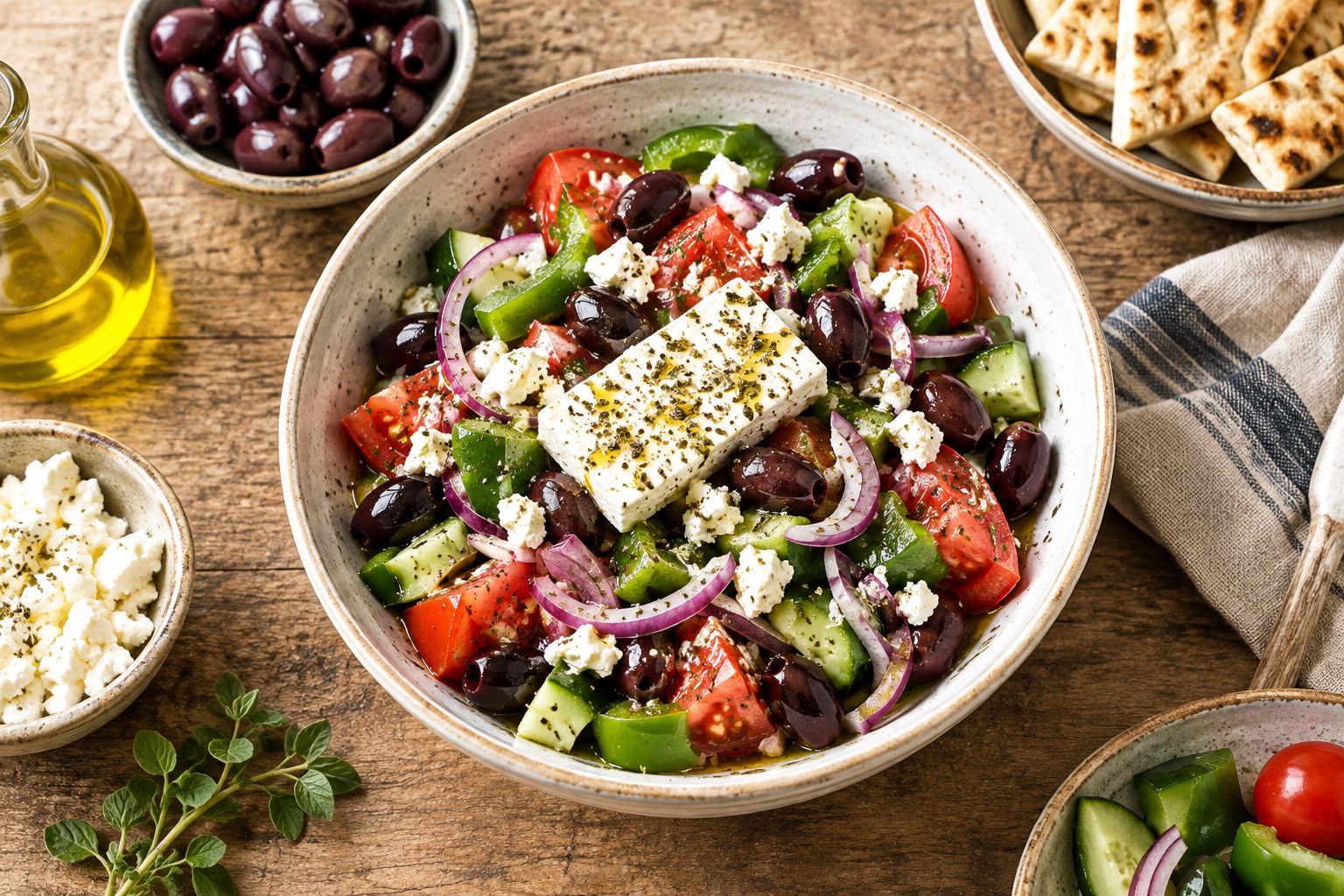
A traditional Greek village salad, or horiatiki, centres on substantial pieces of vegetables rather than a bed of lettuce. Keep that generous, unfussy character: let the olives punctuate the salad instead of turning every mouthful into an olive mouthful.
Prepare Kalamata olives for Greek salad and mezze
Choose the olive format for your table
Start with the olives already in your pantry. Read the label, check whether they are whole or pitted, and decide whether they belong in a mixed salad or a separate serving bowl. You do not need special equipment to make that decision.
Pitted Kalamata olives suit a salad you want to toss and serve without asking guests to manage stones. Whole Kalamata olives suit a separate mezze bowl when you want to serve that format and can provide somewhere for the stones. Neither format proves a particular texture or flavour; curing and packing details also matter.
For a family table, make the format clear before anyone starts eating. Pitted olives still deserve a check for remaining stones or fragments, especially when preparing food for children.
- Read the olive name rather than relying on the colour in a photograph.
- Check whether the label says whole, pitted or sliced.
- Choose pitted olives for a salad you intend to toss.
- Serve whole olives separately with a bowl for discarded stones.
- Check the ingredients and storage instructions before opening.
Taste the olives before seasoning
Drain a small portion into a bowl and taste an olive before you season the salad. Then taste the feta you plan to use. This simple check tells you more about the salt balance of your actual ingredients than a fixed seasoning instruction.
Keep the packing liquid out of the salad bowl. Your tomatoes already contribute juice, and the dressing should bring the ingredients together rather than dilute them. If the olives taste too salty for your preference, briefly rinse the portion you are about to serve, drain it thoroughly and taste again.
For a quicker preparation route, Three Olives Pantry’s Sparta Gourmet Pitted Kalamata Olives remove the need to pit whole olives yourself. The limitation remains practical: pitted does not mean you should skip inspection, and the 545g pack size is not a statement of drained olive weight.
- Taste an olive and a piece of feta together.
- Drain only the portion you need for the meal.
- Rinse that portion only if its saltiness needs adjusting.
- Keep olive packing liquid out of the dressing.
- Add extra salt after tasting the assembled salad.
Build the salad around the vegetables
Cut ripe tomatoes into generous pieces and cucumber into pieces that are easy to pick up with a fork. Slice the onion more finely so it does not dominate. Add green capsicum if you want that familiar village-salad combination.
Arrange the vegetables in a broad bowl, add the drained olives and finish with feta. A slab of feta gives the bowl a traditional presentation; smaller pieces make it easier to share evenly. Both approaches work, but avoid crumbling the cheese so thoroughly that it coats everything before the salad reaches the table.
Use the salad bowl as your preparation tool. Keeping the vegetables substantial and tossing gently protects their shape, while leaving the feta until late helps you control the final balance.
- Cut tomatoes and cucumber into substantial, fork-friendly pieces.
- Slice onion finely and keep its quantity in balance with the tomatoes.
- Add green capsicum if it suits your household’s preferences.
- Fold in drained olives without crushing the vegetables.
- Place feta on top or add it in distinct pieces.
Dress the salad without hiding the olives
Start with the extra virgin olive oil you already use and taste it with a piece of tomato. Add dried oregano and, if you enjoy a sharper dressing, a little wine vinegar. You can mix the dressing in a small bowl or add it directly to the salad; neither approach needs a blender.
For a Greek pantry option, Koroneiki Greek Extra Virgin Olive Oil Single Varietal 500ml identifies its oil category and variety in the product name. Choose it for the role of dressing oil, not because the name proves a particular pepperiness, acidity figure or tasting result.
Keep the dressing restrained. Tomato juice, olive oil and the savoury ingredients should remain recognisable, and extra vinegar is a preference rather than a requirement for every Greek salad.
- Taste the olive oil with tomato before dressing the whole bowl.
- Use dried oregano to give the salad a familiar herbal note.
- Add wine vinegar only when you want more sharpness.
- Toss gently so the dressing reaches the vegetables.
- Taste a complete forkful before adjusting salt or vinegar.
Arrange the mezze in separate bowls
Begin with what you already have: the prepared olives, bread, sliced vegetables and a dip. Put wet or brined ingredients into small bowls rather than directly onto a board. This keeps their liquid away from the bread and lets guests choose their own combinations.
Premium Greek Rock Samphire in Brine 200g is a separate Mediterranean accompaniment, not a substitute for Kalamata olives. Its brined format makes draining and tasting useful before serving; keep it in its own dish so it does not change the whole salad’s flavour.
Best for a flexible mezze spread: offer the olives separately and let guests build their own plate. That approach is especially useful when some guests prefer less salt, dislike olives or want their salad without feta.
- Put olives in a bowl with a dedicated serving spoon.
- Keep rock samphire and other brined accompaniments in separate dishes.
- Place bread away from wet ingredients.
- Serve feta and dips separately when guests need choices.
- Leave room between bowls so the spread is easy to use.
Store the remainder according to the label
Read the opened-storage instructions before putting the jar away. Use a clean utensil to take out the olives you need, and keep the remaining contents in their original packing medium where the label instructs. Do not replace commercial packing liquid with a homemade mixture and assume the same keeping time applies.
Prepare only the portion you intend to serve. Once olives have been mixed into salad with vegetables and feta, treat them as part of that prepared dish rather than returning them to the original container.
For your 2026 pantry routine, make the label the reference point. Storage advice for an unopened product is not automatically the same as advice after opening, and a dressed salad is a different food from a jar of cured olives.
- Follow the product’s instructions for storage after opening.
- Use clean utensils when removing olives from the container.
- Keep unused olives separate from the dressed salad.
- Do not pour served olives back into the original jar.
- Retain the label so you can check instructions later.
Compare options for your 2026 salad and mezze
Choose each ingredient for a job rather than treating every Mediterranean pantry item as interchangeable. The named products below have distinct uses: an olive for the salad, an oil for the dressing and a brined accompaniment for a separate bowl.
| Option | Best for | Practical strength | Key limitation |
|---|---|---|---|
| Sparta Gourmet Pitted Kalamata Olives 545g | Mixed Greek salad and easy-to-share mezze | Pitted format avoids manually removing every stone | Check for remaining stones; pack size does not establish drained weight |
| Koroneiki Greek Extra Virgin Olive Oil Single Varietal 500ml | Dressing tomatoes, cucumber and feta | Named Greek extra virgin olive oil for the dressing role | The product name alone does not establish its tasting profile |
| Premium Greek Rock Samphire in Brine 200g | A separate Mediterranean mezze accompaniment | Offers a distinct ingredient alongside the olives | Brined format needs tasting; it does not replace Kalamata olives |
| Whole Kalamata olives | A separate olive bowl | Lets you serve olives in their whole format | Guests must manage stones, and salad preparation requires extra work |
All three named products are part of the Three Olives Pantry ingredient selection supplied for this guide. For the salad itself, prioritise the pitted Kalamata olives; the oil supports the dressing, while rock samphire belongs beside the salad when you want another accompaniment.
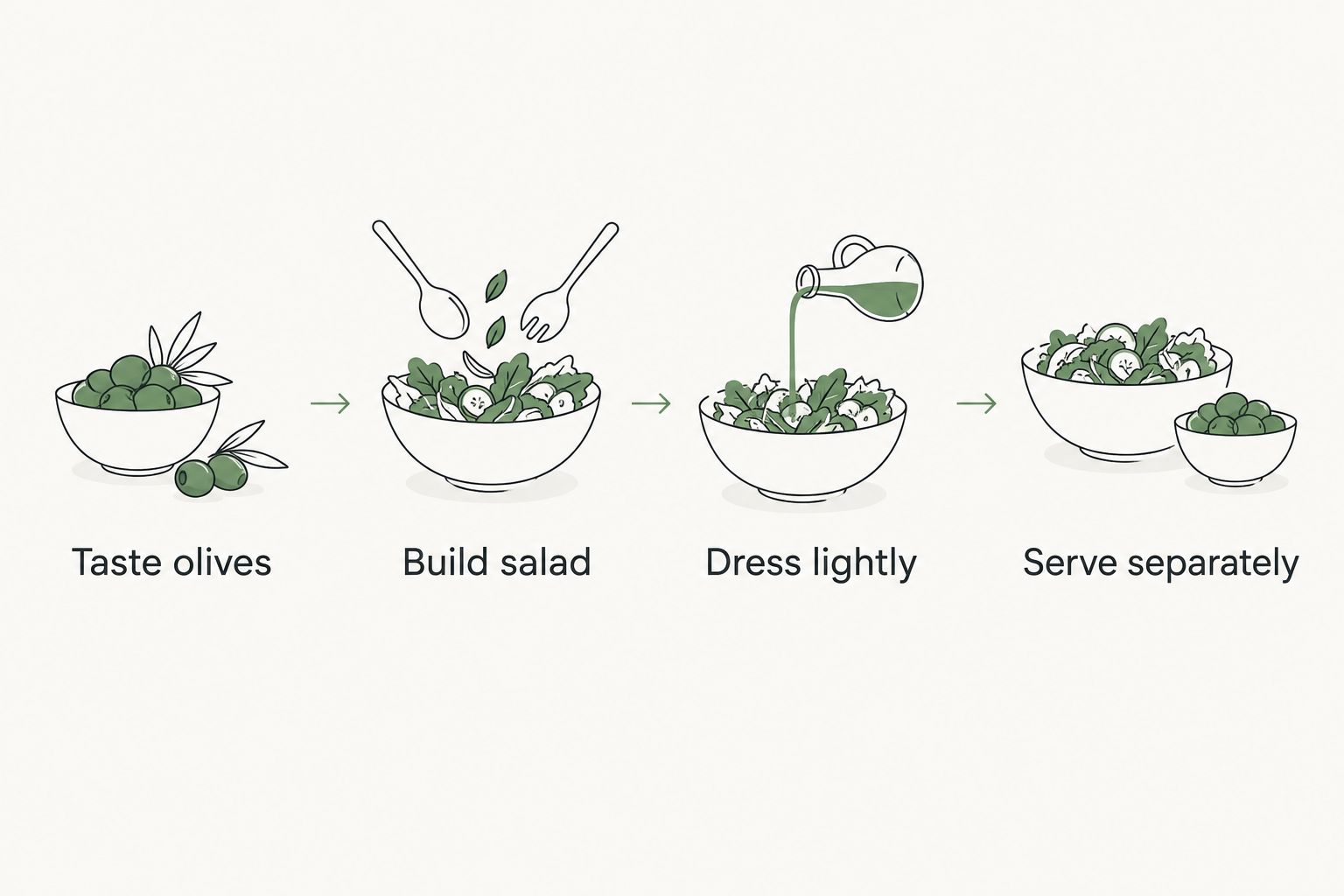
A useful serving sequence is Taste olives, Build salad, Dress lightly, then Serve separately when moving to mezze. That sequence keeps seasoning decisions ahead of presentation, where they belong.
Common mistakes home cooks should avoid in 2026
Choosing by colour alone
Dark colour does not identify an olive variety. Read the product name and ingredients when you want Kalamata olives, and do not assume every dark olive gives the same result in a Greek salad.
Salting before tasting the feta and olives
Olives and feta already contribute salt to the dish. Taste them together with tomato before adding more; a heavily salted dressing leaves you little room to adjust the finished bowl.
Treating packing liquid as salad dressing
Packing liquid serves a different purpose from a dressing you have balanced for your vegetables. Drain the olives, then use olive oil and any chosen vinegar deliberately rather than tipping the jar into the bowl.
Mixing every mezze ingredient into the salad
Rock samphire, dips and other accompaniments do not all need to share the salad bowl. Separate dishes preserve each ingredient’s character and give guests a choice instead of one fixed combination.
Assuming pitted means no inspection
A pitted format simplifies preparation but does not replace checking. Inspect the olives you serve and make the format clear to guests, particularly when children are eating from the shared bowl.
FAQ
What are the best Kalamata olives for Greek salad?
Pitted Kalamata olives are the practical choice for a Greek salad you want to toss and share. Sparta Gourmet Pitted Kalamata Olives 545g is the relevant Three Olives Pantry option; check the ingredients and inspect for remaining stones before serving.
Should I use whole or pitted Kalamata olives for mezze?
Use pitted olives for easy eating or whole olives when you prefer a separate whole-olive bowl. If you serve whole olives, provide a dish for stones and tell guests what they are eating.
Do I need to rinse Kalamata olives before making Greek salad?
Rinse the portion you will serve only if tasting shows that it is too salty for your preference. Drain it thoroughly afterwards and keep the packing liquid out of the salad.
Does a traditional Greek salad need lettuce?
A traditional Greek village salad does not need lettuce. Tomatoes, cucumber, onion, green capsicum, feta, olives and olive oil form its familiar core, with oregano commonly used for seasoning.
Can I use rock samphire instead of Kalamata olives?
Rock samphire is a separate accompaniment, not a like-for-like replacement for Kalamata olives. Serve brined rock samphire in its own bowl when you want another Mediterranean flavour alongside the salad.
How do I store Kalamata olives after opening?
Follow the product label’s opened-storage instructions and use clean utensils. Keep unused olives separate from prepared salad, and do not return served olives to the original container.
What should I check when buying Kalamata olives online in 2026?
Check the olive type, whole or pitted format, ingredients, stated pack size and storage instructions. Do not treat total pack weight as drained weight unless the product details explicitly say so.
One last thing
The liquid at the bottom of a Greek salad bowl is not automatically a sign of too much dressing: cut tomatoes release juice. Before adding another pour of oil, taste that tomato-and-dressing mixture with a piece of bread.
For your next shared table in 2026, make one salad and keep the remaining olives in a separate mezze bowl. You get a clear vegetable-led centrepiece, an easy accompaniment and more freedom for everyone eating with you.
Related guides
- How to build a Cypriot mezze board for entertaining guests
- Greek extra virgin olive oil for salad dressing