
Zaatar sits on breakfast tables from Beirut to Nicosia, and in 2026 it's one of the most-searched Mediterranean pantry terms among Australian home cooks, averaging 22,200 searches a month. This guide ranks the zaatar options worth stocking in 2026, from a ready-mixed Lebanese blend to a DIY version built around Greek oregano and a peppery single varietal olive oil.
- The Pinch Zaatar Seasoning is the best overall zaatar pick for 2026, a ready-mixed Lebanese herb and sesame blend.
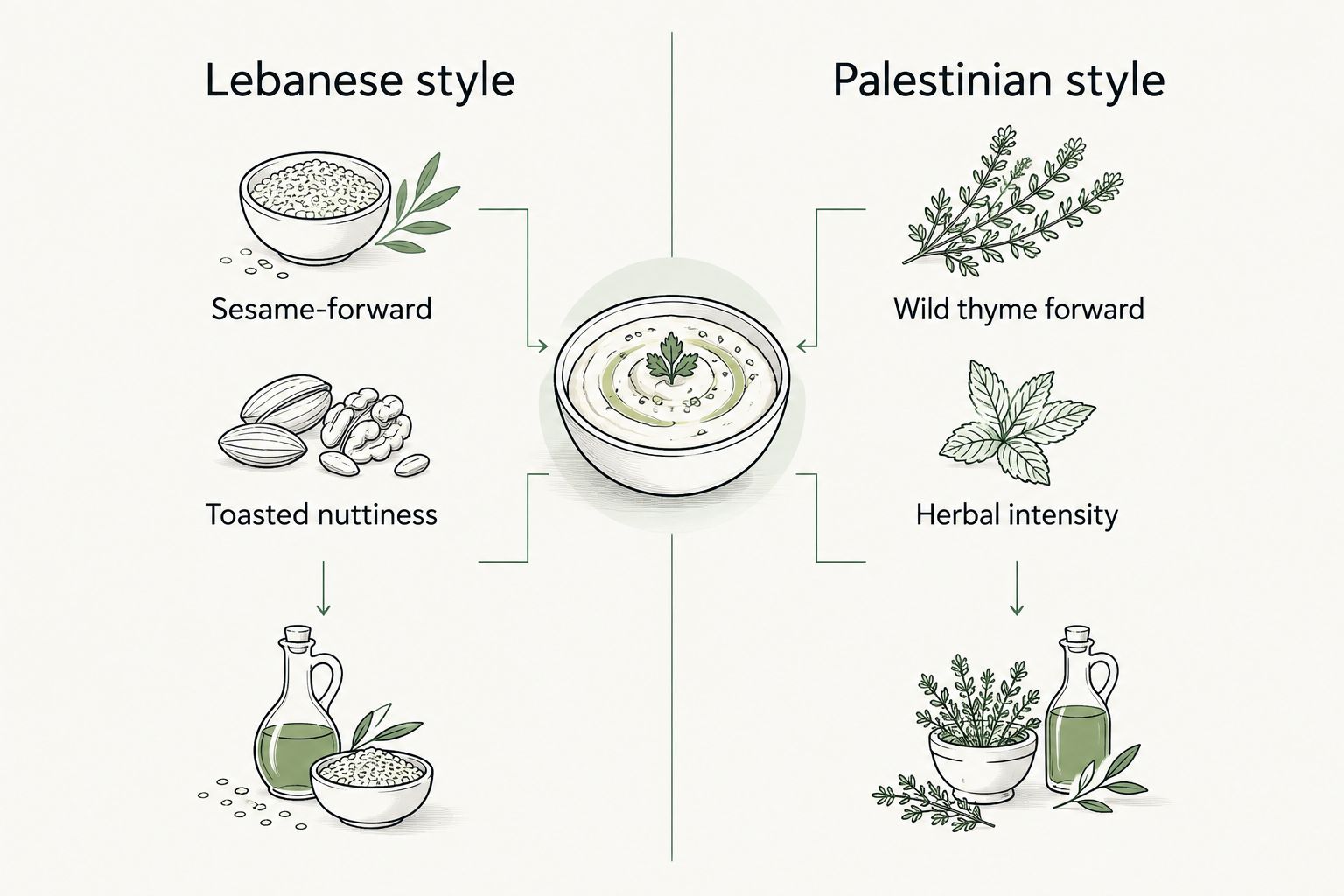
- Palestinian-style zaatar leans more herbal and wild-thyme forward but is harder to source correctly in Australia.
- A DIY blend built on organic Greek oregano suits cooks who want to control salt and sesame ratios.
- Pairing zaatar with a robust Koroneiki extra virgin olive oil makes the strongest za'atar wa zeit dip for mezze boards.
Why this matters
Zaatar isn't one fixed recipe. It's a family of herb, sesame and sumac blends that shift by region, by household, and even by which bakery you trust for manakish. Getting the blend wrong doesn't ruin dinner, but it does mean paying for a jar that tastes flat, over-salted or stale before you've used a third of it.
The Pinch Zaatar Seasoning is built around the Lebanese Herb and Sesame Blend style, and it's the version most Australian pantries reach for first because it's ready to use straight from the jar. The comparisons below weigh it against the main regional style and two ways of building your own, so you can pick based on how you actually cook.
What makes the best zaatar
- Herb-to-sesame-to-sumac ratio: too much sesame reads nutty and flat, too much sumac turns sour
- Toasting: the sesame should smell toasted, not raw, straight out of the jar
- Salt level: blends vary widely, so taste before seasoning a whole dish around it
- Pack size and turnover: smaller packs stay fragrant longer once opened
- Regional accuracy: Lebanese blends lean sesame-forward, Palestinian blends lean wild-thyme-forward
- Versatility: a good zaatar works on bread, roasted vegetables, eggs and yoghurt without extra tweaking
Zaatar at a glance
| Zaatar option | Best for | Standout feature | Key limitation |
|---|---|---|---|
| The Pinch Zaatar Seasoning | Everyday Mediterranean cooking | Ready-mixed Lebanese blend with toasted sesame | Small pack for heavy daily users |
| Palestinian-style zaatar | A herbal, wild-thyme profile | Higher wild hyssop content, lighter sesame | Hard to source labelled correctly in Australia |
| DIY blend with organic Greek oregano | Controlling your own ratio | Organic certified base herb, adjustable salt and sumac | Needs extra ingredients and prep time |
| Zaatar with Koroneiki olive oil | Mezze boards and bread dipping | Robust, peppery single varietal oil | Assertive flavour can overpower milder blends |
1. The Pinch Zaatar Seasoning: best zaatar for everyday Mediterranean cooking
The Pinch Zaatar Seasoning is a Lebanese Herb and Sesame Blend in a 45g pack, built to be citrusy, toasted and deeply aromatic straight out of the jar. It's rooted in Lebanese pantry tradition, which means sesame and sumac carry more weight here than the wild herb note you'd get from a Palestinian-style mix.
The Pinch Zaatar pros:
- Ready-mixed, so there's no measuring sesame, sumac and thyme separately
- Toasted sesame comes through clearly rather than tasting raw
- Sized for regular use without the blend sitting stale in a cupboard for months
- Works straight on flatbread, roasted vegetables, hummus or scrambled eggs
The Pinch Zaatar cons:
- The 45g pack means reordering often if you use zaatar daily
- The ratio is fixed, so cooks chasing a stronger sumac tang can't adjust it in the jar
Best for: home cooks who want a reliable, ready-to-use zaatar without sourcing separate herbs.
The Pinch Zaatar Seasoning verdict: Buy.
2. Palestinian-style zaatar: best for a herbal, wild-thyme profile
Palestinian-style zaatar leans harder on wild thyme and hyssop and lighter on sesame than the Lebanese style behind The Pinch Zaatar Seasoning. It's traditionally eaten as za'atar wa zeit, bread dipped in olive oil then pressed into the herb mix, with the herb doing more of the talking than the sesame.
Palestinian-style zaatar pros:
- More herbal intensity for cooks who find sesame-forward blends too nutty
- Traditional pairing for simple bread-and-oil breakfasts
Palestinian-style zaatar cons:
- Genuinely wild hyssop is inconsistent to source labelled correctly in Australia
- Most retailers blend it under generic zaatar labelling anyway, so verifying the style means reading ingredient lists closely
Best for: cooks chasing a specific regional flavour who are prepared to read labels closely.
Palestinian-style zaatar verdict: Skip for most kitchens; The Pinch Zaatar Seasoning covers the same everyday use case more reliably.
3. DIY blend with organic Greek oregano: best for controlling the ratio
Building your own zaatar starts with a base herb, and organic Greek oregano works as a substitute for wild thyme when you want a stronger, more pungent backbone than a mild pre-mixed blend gives you. Add toasted sesame and sumac to taste, plus a pinch of salt, and you control every part of the ratio yourself. Guidance on keeping the finished blend fragrant lives in the dried herb and spice storage guide.
DIY oregano-based zaatar pros:
- Organic certified base herb, so you know what's going into your blend
- 500g means you're not restocking a spice jar every few weeks
- You control salt and sumac levels dish by dish
DIY oregano-based zaatar cons:
- Takes extra time and two more ingredients you have to source yourself
- Oregano is more pungent than wild thyme, so the flavour reads different from traditional zaatar, not identical
Best for: cooks who already blend their own spice mixes and want a bulk herb base.
DIY oregano-based zaatar verdict: Buy if you're the type who tweaks ratios anyway; skip if you'd rather not manage three jars for one blend.
4. Zaatar with Koroneiki extra virgin olive oil: best for mezze boards and bread dipping
Za'atar wa zeit is only as good as the oil underneath it, and a single varietal Koroneiki extra virgin olive oil gives the dip a peppery backbone that plain blended oils don't. Koroneiki is one of Greece's most planted olive varieties, known for a robust, slightly peppery finish that holds up against toasted sesame and citrusy sumac instead of disappearing under them.
“If the sesame in your zaatar isn't audibly toasted when you shake the jar, it's already going stale.”
Koroneiki and zaatar pairing pros:
- Single varietal oil gives a consistent flavour profile bottle to bottle
- Peppery finish stands up to zaatar's sesame and sumac instead of getting lost
- Doubles as a dressing base for salads once the mezze board is cleared
Koroneiki and zaatar pairing cons:
- The assertive pepper note can overpower milder zaatar blends for readers who prefer a soft, buttery oil
- Not necessary if you already stock a general everyday olive oil for cooking
Best for: entertaining, mezze boards and bread-dipping nights.
Koroneiki and zaatar pairing verdict: Buy for entertaining; hold off if a milder everyday oil already covers your dipping needs.
How we ranked these zaatar options
Every option above is judged against the six criteria listed earlier: ratio balance, toasting, salt level, pack size, regional accuracy and versatility across a normal week of cooking. The Pinch Zaatar Seasoning scores highest because it's the only ready-mixed option here that hits all six without extra prep in 2026. Palestinian-style zaatar and the DIY oregano blend trade convenience for a specific flavour outcome, and the Koroneiki pairing is judged on how well it complements a zaatar blend rather than as a substitute for one.
Which zaatar should you choose in 2026?
If you cook Mediterranean food more than once a week and don't want another spice project, The Pinch Zaatar Seasoning is the default pick. It's ready-mixed, toasted properly, and sized so it doesn't go stale in the cupboard before the jar's finished. Reach for the DIY oregano-based route only if you already enjoy building your own spice mixes, and treat the Koroneiki pairing as the finishing touch for entertaining, not a replacement for the zaatar itself.
FAQ
What is zaatar?
Zaatar is a Mediterranean blend of dried herbs, toasted sesame, sumac and salt, eaten across Lebanon, Palestine, Jordan and Syria. The exact herb and sesame ratio shifts by region, with Lebanese versions leaning sesame-forward and Palestinian versions leaning more herbal.
Is zaatar gluten-free?
A traditional zaatar made from dried herbs, sesame, sumac and salt contains no gluten ingredients. Always check the specific brand's label, since some commercial blends add fillers.
What is the difference between zaatar and sumac?
Sumac is one ingredient inside a zaatar blend, a tangy dried berry that gives the mix its citrus note. Zaatar is the full blend of herbs, sesame, sumac and salt together.
How do you use zaatar in cooking?
Mix zaatar with olive oil and dip warm bread into it, or sprinkle it dry over roasted vegetables, hummus, eggs or yoghurt. It also works rubbed onto flatbread dough before baking for manakish.
Where can you buy zaatar in Australia?
Mediterranean grocers stock zaatar online and in store, including The Pinch Zaatar Seasoning at Three Olives Pantry. Specialty Lebanese and Middle Eastern grocers are the other reliable source.
Is zaatar vegan?
Yes, the base ingredients of herbs, sesame, sumac and salt are all plant-based. Check individual brand labels for any added ingredients before buying.
How do you keep zaatar fresh once it's opened?
Store zaatar in an airtight container away from light and heat, since the toasted sesame is what turns stale fastest. A smaller pack that gets used up quickly stays fragrant longer than a large jar that sits half-full for months.
Can you substitute oregano for zaatar's wild thyme?
Yes, oregano works as a substitute when wild thyme or hyssop isn't available, and it's the basis for a DIY zaatar blend. The flavour reads more pungent and less herbal than a traditional Lebanese or Palestinian mix.
One last thing
The ratio of oil to zaatar matters more than which blend you buy. Start with roughly one tablespoon of olive oil to two teaspoons of zaatar for a bread dip, then adjust from there; a blend that tastes flat straight out of the jar often comes alive once it's mixed wet.